
How Ephesus Arrests Work
Ephesus counted 471 residents in the 2020 Census. It ranks second among Heard County's three incorporated places. County material does recognize it as a municipality. The city itself publishes no police website, roster, booking feed, or booking-photo page. That gap is narrow. It does not mean Ephesus has no officers, and it does not prove the sheriff handles every arrest.
The agency and the jail are not the same. The office that made the arrest keeps the incident report, citation, affidavit, or warrant return. Heard County Jail holds the booking record once it accepts the person. Because the jail also holds people for other jurisdictions, the place of confinement proves nothing about who made the arrest. Confirm those fields instead of guessing from the city name.
Ephesus Has No Public Feed
Ephesus publishes no municipal roster or blotter. HCSO's site covers jail operations well. It offers no public inmate search, same-day list, multi-day log, mugshot page, or jail app. So an empty online search tells you little about whether an Ephesus arrest happened.
No verified public feed exists. Calling a vendor page the Ephesus roster is wrong. Those sites may show old records, miss a booking, or match the wrong person. Some even confuse a place name with an arresting jurisdiction. For present custody, confirm with HCSO directly. A past booking needs a narrow records request, and the court holds the later outcome.
Note: No official Ephesus arrest page publishes a refresh hour, weekend schedule, or archive depth.
Where Ephesus Arrests Appear
Official channels come first, even though they require contact rather than a name-search page. Unofficial leads come second. Their city labels and dates need independent confirmation.
| Channel | Official? | Best use | Limits |
|---|---|---|---|
| Ephesus municipal contact | Yes | Confirm current city custodian and police jurisdiction | No city-specific form or log located |
| Heard County Jail | Yes | County booking and custody contact | No public roster found |
| Weekly Arrest Reports | No | County, Franklin Police, and state patrol leads | No separate Ephesus section |
| Georgia Gazette Heard | No | County case reporting | Article-based, not complete custody data |
| Mugshots.com Heard category | No | Historical lead only | Old, unofficial, and not current proof |
The local weekly organizes its page around Franklin Police, HCSO, and Georgia State Patrol. Ephesus gets no section there. The Gazette covers incidents from anywhere in Heard County but promises no complete city coverage, and Mugshots.com lists Ephesus while showing historical third-party material. None of that replaces the agency record.
Check an Ephesus Arrest
Start with your actual question. Was someone taken into custody today? Each question points to a different office, so keep them apart to avoid false matches.
- Write down the full name, approximate event date, and place without publishing sensitive details.
- Contact the Ephesus municipal office to identify the current law-enforcement jurisdiction or city records custodian when the agency is unknown.
- Call HCSO at (706) 675-3329 for Heard County Jail custody or booking questions. The non-emergency dispatch line is (706) 675-3328.
- Ask for the arresting-agency field. Send the incident-report request to that agency and the jail-booking request to HCSO.
- Use the proper court route for the disposition after arraignment, plea, trial, dismissal, or another outcome.
Arraignment is the court stage where charges are formally addressed. Disposition means the case's result. Neither can be read from an intake charge or an old booking photo. A release may only mean bond. The case can stay active, and only the court record shows the result. The Heard County recent-arrests hub gives the full county booking and photo path. It also adds a Georgia Department of Corrections search. That search covers anyone later sent to state custody.
Ephesus Arrest Record Requests
Ephesus publishes no records form, fee schedule, or turnaround promise. Skip the assumed police department. Ask the municipality which officer keeps the city-side record first. Another agency may have handled the arrest. Send the incident request there.
Heard County Sheriff's Office
11820 Highway 100 North
Franklin, GA 30217
Main/TTY: (706) 675-3329
Non-emergency dispatch: (706) 675-3328
For anyone booked at Heard County Jail, start with the official HCSO request form. It offers inspection, pickup copies, or mailed copies. Submit it in person or by mail. The mail address is Open Records Request, HCSO, P.O. Box 339, Franklin, GA 30217. Email works at jolinger@heardcountyga.com.
Name the person and a date range. Add the arresting agency if you know it, plus the exact items you want. Request the booking record, charges as booked, bond data, release or transfer data, and any booking photo that is legally disclosable. The form asks for at least three business days from the incident. It also sets a three-business-day response window, excluding holidays and emergency closures, though that never promises every image will be released.
Ephesus Records Request Timing
Georgia's open-records law lets an agency redact protected details. It does not force the agency to create a new report. HCSO may charge copy and administrative costs. The first 15 minutes of search time are free. After that, the rate matches the lowest-paid qualified full-time employee. Ask for a cost estimate before work begins.
A targeted request beats asking for all Ephesus arrests. Give an approximate date span and name each record. Jail administrative hours run Monday through Friday, 9:00 a.m. to 5:00 p.m., while detention staff work around the clock, so a custody call and a document response move on different clocks.
- Booking
- The jail's intake process and administrative custody record.
- Bond
- A court-set condition that may allow release while a case continues.
- Disposition
- The court's final handling of a charge.
- Redaction
- Removal of protected details from an otherwise releasable copy.
Note: The three-business-day window is a response rule, not a photo release date or a feed refresh schedule.
Ephesus Arrest Geography
Heard County's city ranking draws on the Census Bureau's incorporated-place table.
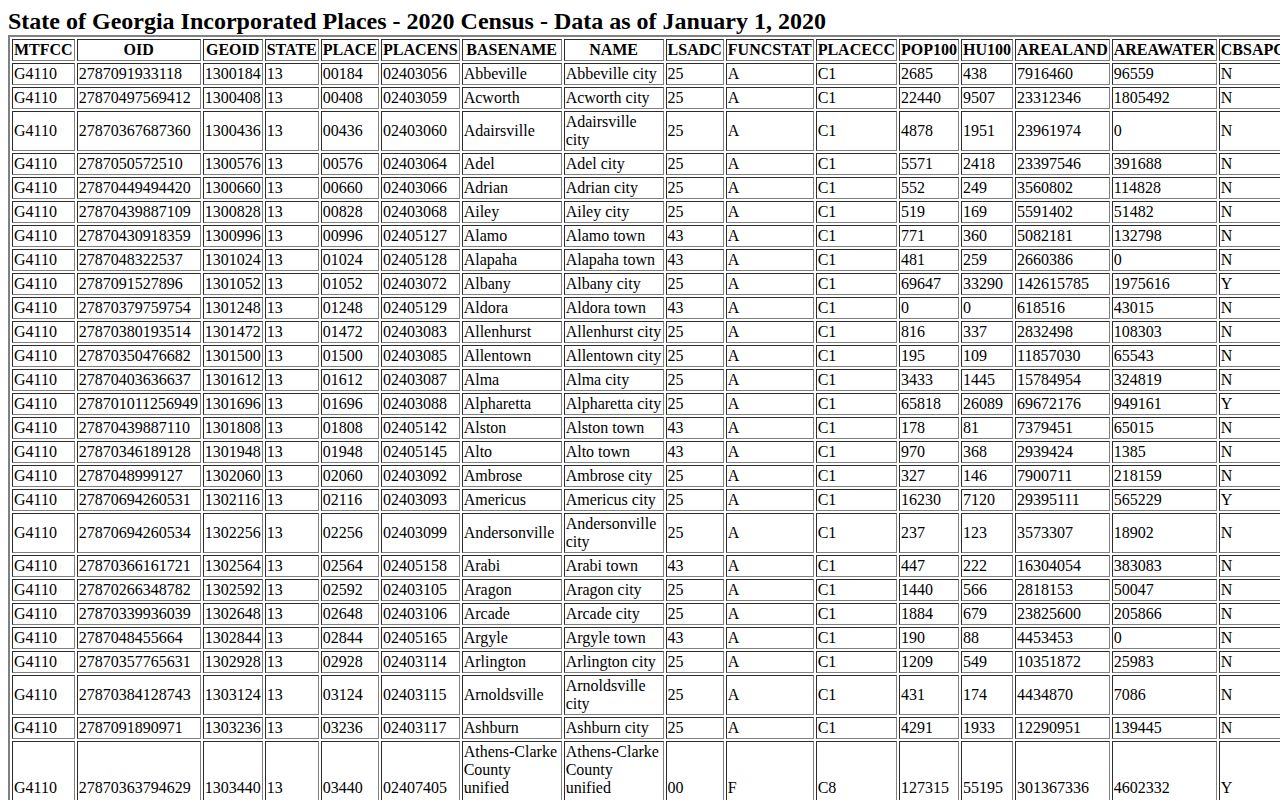
Ephesus works as a place label. That's all it proves. Nothing about the label points to a separate arrest agency or its own roster. Geography is only the opening clue. A report can call an incident an Ephesus event even when a county deputy or a state trooper made the arrest. The reverse happens too. A Heard County Jail record names the booking site but stays silent on which agency did the work unless its arresting-agency field is filled in. Ask both questions every time.
Ephesus Arrest Coverage Limits
Small-city coverage invites false completeness. A missing Ephesus section means nothing. Weekly publishers set their own scope and schedule. A missing section is not a statement that no arrests occurred. An old commercial category that skips a person is just as weak. And HCSO keeps its county jail data off public search. Skip third-party photo sites entirely. A historical booking image proves nothing about who is in custody now. This page reproduces no face gallery. For a defined booking, request the photo from HCSO. Name the record you have a legitimate reason to seek. Georgia's booking-photo rules and any exemptions still govern. The sound order starts with city confirmation. Then comes HCSO custody or booking confirmation. Follow that with the arresting agency's incident record, then the court disposition. Each step keeps its own question separate. One asks where it happened and who made the arrest. Another covers where the person was booked and how the case ended.